Blog posts

2025

Building an AI Team Part 2: Orchestrating sub-agents with the filesystem

less than 1 minute read

Published:

In the second part of the series, I dive into the technical coordination of my AI team, specifically using the local filesystem as a shared state mechanism. I explain how my sub-agents (responsible for tasks like research, coding, or review) communicate by reading and writing files in a structured way.

Building an AI Team: My journey from prompts to local agents

less than 1 minute read

Published:

This post details my transition from basic LLM prompting to a more structured “AI Team” approach. Frustrated by the limitations of single-prompt interactions, I built a system of specialized local agents using tools like Ollama and Llama 3. My focus is on creating autonomous agents that can handle specific parts of a workflow.

Why I Run Kubernetes on Top of Kubernetes: Rancher + Harvester

less than 1 minute read

Published:

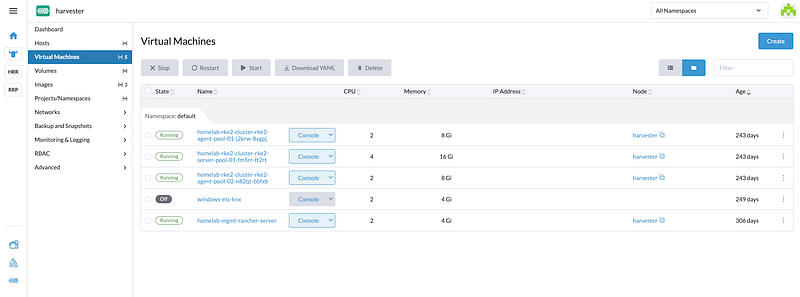
I explain the benefits of a “Kubernetes-on-Kubernetes” architecture using Rancher and Harvester. I use Harvester as a bare-metal hyper-converged infrastructure (HCI) solution built on KubeVirt and Longhorn, providing a stable base for my virtualized workloads. Rancher then sits on top to orchestrate and manage multiple downstream Kubernetes clusters.

Autoscaling Made Easy with Rancher

less than 1 minute read

Published:

In this article, I explore how to implement seamless cluster autoscaling in RKE2 environments using Rancher’s Node Drivers and MachineDeployment resources. I highlight the use of the upstream Kubernetes Cluster Autoscaler (CA) as the core engine, which communicates with Rancher to dynamically provision or terminate nodes based on pod demand.